There is always a need for additional online resources on the Carpatho-Rusyn prostopinije (plainchant) tradition and in my own circles, I have recognized an acute need to put together an explanation of the tone for reading the Canons from the Matins (morning prayer) service for the benefit of our Cantors and Lectors, so here is such a summary of the way I learned to chant the Canon.
The Canon is the central component of Matins in the Greek Rite and often takes the form of an extended poetic reflection on the theological themes proper to the day. In the specific Greco-Byzantine church, the entire Canon is customarily sung with highly ornate and complex melodies. But in Slavic churches, including the Ruthenian Recension, only the Irmos and Katavasia (beginning and ending hymns) of each Ode (section) of the Canon are sung to melody. The rest of the tropars (verses) are sung to a particular form of the reading tone, alternating with a simple repeating refrain. This reading tone is the subject of this post.
The tone for reading Canons bears a great resemblance to the Epistle tone. For those wishing to learn about this and the role of reading the Epistle more generally, here is an excellent resource: The Chanting of the Epistle – Prostopinije Files. To be precise, the Canon tone shares a similarity to the “A” and “B” phrases of the Epistle tone. To illustrate this, here is what these two phrases of the Canon tone look like set to music:
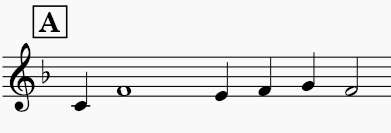
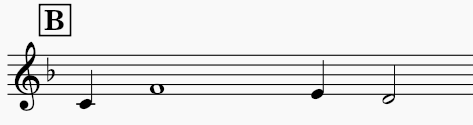
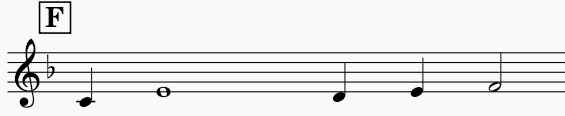
As with the Epistle tone, these phrases are repeated cyclically one after the other until the final phrase of the passage. Unlike the Epistle tone, however, the Canon tone does not have a recurring “C” phrase centered on “La” (i.e. the note written as “D” here). And the final (“F”) concluding phrase for Canon verses is simpler than that usually used for the Epistle:
There is typically a great volume of text to get through, so the tone is simple enough to move through fairly quickly, but still has enough embellishment to give it greater solemnity than the basic three-pitch reading tone we typically use for chanting the Psalms as well as the Beginning and Ending prayers common to all the services of the Divine Office.
To conclude, here is an example of me chanting a tropar in this manner from the Great Canon of St. Andrew of Crete that we will be serving later this week:
Text: “O Lord, God of Mercy, * look upon me with compassion * and accept the confession of my sins from my lips.”
 The Based Byzantine
Leave a comment